Image failed to load
Single Punch Tablet Press Machine
Product Overview
The DP12 model is suitable for smaller tablets up to 12 mm diameter, while the DP25 model supports tablets up to 25 mm diameter, making both models suitable for pharmaceutical laboratories, food research, chemical testing, and pilot-scale tablet development.
Definition
The Single Punch Tablet Press DP12/DP25, manufactured by Sinoped, is a compact laboratory tablet press machine designed for pharmaceutical research, small-batch tablet production, and material compression testing. It is mainly used to compress powder and granular raw materials into tablets with controlled diameter, thickness, and hardness.
Compared with high-speed rotary tablet presses used for large-scale manufacturing, the single punch tablet compression machine provides greater flexibility for formulation development, pilot testing, and laboratory applications. Its adjustable filling depth and tablet thickness make it suitable for different tablet formulations in pharmaceutical, chemical, food, electronics, and research industries.
The DP12/DP25 tablet press combines a stable mechanical structure with easy operation, making it a practical solution for companies and laboratories that require a reliable tablet making machine for R&D and small production environments.
How It Works
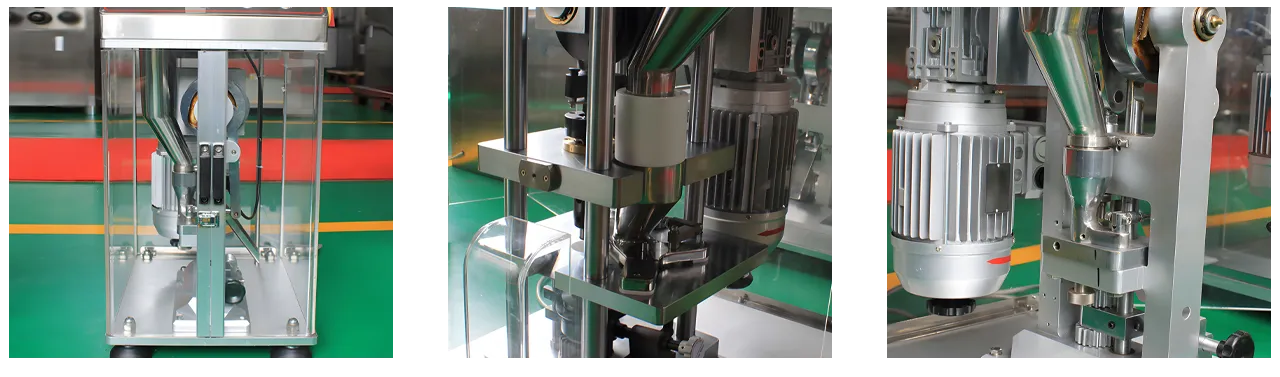
The single punch tablet press machine uses a mechanical compression principle to transform powder or granulated materials into solid tablets. During operation, the material enters the die cavity, and the upper and lower punches apply controlled compression force to form tablets with consistent dimensions.
The filling depth determines the amount of material loaded into the die cavity, while the compression system controls tablet density and thickness. After compression, the lower punch moves upward to release the finished tablet.
Sinoped DP12/DP25 adopts a four-column structure and integrated transmission system, which improves mechanical stability during operation and helps reduce vibration and operating noise. The adjustable compression parameters allow users to optimize tablet quality according to different formulations and production requirements.
Specifications
| Parameter | DP-12 | DP-25 |
| Model | DP-12 | DP-25 |
| Punch Quantity (Set) | 1 | 1 |
| Maximum Tablet Diameter (mm) | 12 | 25 |
| Maximum Output (Tablets/minute) | 60 | 60 |
| Maximum Main Pressure (kN) | 50 | 50 |
| Maximum Filling Depth (mm) | 20 | 20 |
| Maximum Tablet Thickness (mm) | 8 | 8 |
| Motor Power | 220V/50Hz, 1.1 kW | 220V/50Hz, 1.5 kW |
| Overall Size (mm) | 550 × 450 × 750 | 580 × 500 × 830 |
| Weight (kg) | 100 | 150 |
Product Selection Guide
Selecting a suitable laboratory tablet press machine mainly depends on tablet diameter requirements, formulation characteristics, and application scale.
The DP-12 single punch tablet press is designed for smaller tablet production and laboratory testing. With a maximum tablet diameter of 12 mm, it is suitable for pharmaceutical formulation experiments, material testing, and prototype tablet preparation where compact equipment and flexible operation are required.
The DP-25 tablet compression machine provides a larger compression range with a maximum tablet diameter of 25 mm. It is commonly selected for applications involving larger tablet formats, pilot-scale testing, and pharmaceutical development projects that require broader formulation flexibility.
Both models provide a maximum compression force of 50 kN and adjustable tablet thickness and filling depth, allowing users to evaluate different tablet formulations before transferring processes to industrial tablet production lines.
Comparison Between DP12 and DP25
| Comparison Item | DP12 | DP25 |
| Application Focus | Laboratory testing and small tablet development | Larger prototype tablet production and pilot testing |
| Maximum Tablet Diameter | 12 mm | 25 mm |
| Compression Force | 50 kN | 50 kN |
| Output Capacity | Up to 60 tablets/min | Up to 60 tablets/min |
| Motor Power | 1.1 kW | 1.5 kW |
| Recommended Usage | Research laboratories and formulation testing | Pharmaceutical R&D and pilot production |
Applications
The Sinoped Single Punch Tablet Press is widely used in pharmaceutical development, laboratory research, and small-scale manufacturing applications.
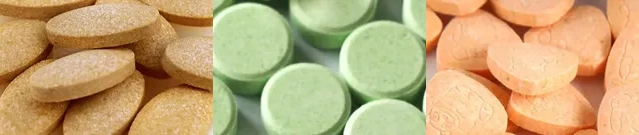
In the pharmaceutical industry, this tablet compression machine is used for preparing different types of tablets, including conventional tablets, chewable tablets, effervescent tablets, extended-release tablets, and prototype formulations during drug development.
For pharmaceutical R&D laboratories, the machine provides an efficient method for evaluating powder compressibility, optimizing formulations, and producing experimental tablet samples before commercial-scale manufacturing.
Beyond pharmaceutical applications, the DP12/DP25 tablet press can also be used in food, nutraceutical, chemical, and electronic industries for compressing powder materials into customized tablet forms for testing and research purposes.
Installation & Maintenance
Proper installation and regular maintenance are important for maintaining stable tablet quality and extending equipment service life.
The single punch tablet press machine should be installed on a stable and level surface with appropriate electrical connection and sufficient operating space. Before operation, users should check the lubrication condition, punch and die installation, and ensure that the compression chamber is clean.
During daily operation, residual powder should be removed after production. Punches, dies, transmission components, and electrical systems should be inspected regularly according to operating frequency. Proper lubrication and timely replacement of worn components help maintain compression accuracy and operational stability.
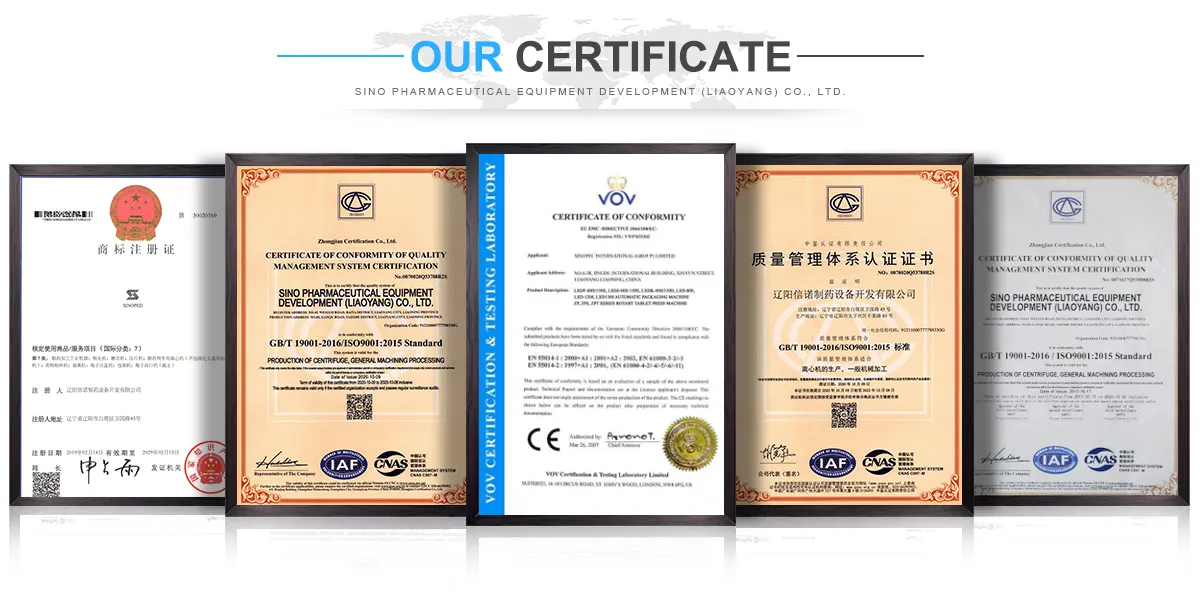
Industry Standards and Compliance
The Sinoped DP12/DP25 pharmaceutical tablet press machine is designed according to general requirements for pharmaceutical and industrial equipment manufacturing.
Depending on the application environment and destination market, tablet compression equipment may need to consider relevant standards and requirements, including:
| Standard / Guideline | Application |
| GMP (Good Manufacturing Practice) | Pharmaceutical production environment requirements |
| ISO 9001 | Quality management system for manufacturing processes |
| CE Requirements | Equipment safety requirements for European markets |
| Pharmaceutical Equipment Design Practices | Tablet production and laboratory application requirements |
Specific compliance requirements may vary according to local regulations and customer production conditions.
Troubleshooting
| Problem | Possible Reason | Recommended Solution |
| Uneven tablet weight | Incorrect filling adjustment or poor powder flow | Adjust filling depth and improve material preparation |
| Tablet cracking | Improper compression parameters or formulation issues | Optimize compression force and formulation characteristics |
| Tablet sticking | Excess moisture or insufficient punch cleaning | Check material condition and clean compression parts |
| Excessive machine vibration | Loose components or insufficient lubrication | Inspect mechanical parts and lubrication system |
| Reduced output | Incorrect operation settings | Check machine parameters and operating procedures |
FAQ
What is a single punch tablet press?
A single punch tablet press is a tablet compression machine that uses one set of punches and dies to compress powder or granules into tablets. It is mainly used for laboratory research, formulation testing, and small-batch production.
What is the difference between DP12 and DP25 tablet presses?
The main difference is the maximum tablet diameter. The DP12 supports tablets up to 12 mm, while the DP25 supports larger tablets up to 25 mm. Both models provide stable compression performance with adjustable operating parameters.
Can this tablet press be used for pharmaceutical R&D?
Yes. The DP12/DP25 is suitable for pharmaceutical laboratories to prepare prototype tablets, test formulations, and evaluate compression processes before scale-up production.
What materials can be compressed by this machine?
The machine can compress many types of powder and granular materials, including pharmaceutical ingredients, food powders, chemical materials, and other experimental formulations.
Is the DP12/DP25 suitable for mass production?
The machine is mainly designed for laboratory applications, research, and small-batch production. For high-volume continuous tablet manufacturing, rotary tablet presses are generally more suitable.
Looking for detailed specifications, pricing, delivery information, or customized equipment solutions?
Contact our International Sales Manager Brucr for professional support regarding pharmaceutical machinery, production equipment, and customized manufacturing solutions.
Sales Manager: Brucr
WhatsApp: +86 13322335577
Our team provides global customers with equipment consultation, technical assistance, and project support.