SINOPED Advances Pharmaceutical Powder Processing Technology Through Manufacturing Experience
Image failed to load
Pharmaceutical Powder Processing Forms the Foundation of Solid Dosage Manufacturing
Every tablet, capsule, and many other solid pharmaceutical products begin with one essential step—preparing powders with consistent physical characteristics and uniform ingredient distribution. Before compression or filling can take place, pharmaceutical ingredients must be blended, conditioned, and processed into materials that can move efficiently through downstream manufacturing. For this reason, pharmaceutical powder processing remains one of the most important stages in modern pharmaceutical production.
As formulations become more sophisticated and manufacturing standards continue to rise, powder preparation has evolved far beyond simple material mixing. Today's pharmaceutical manufacturers focus on achieving stable particle characteristics, reliable material flow, and repeatable processing conditions throughout the entire production cycle. Improvements made during this stage influence every subsequent operation, including tablet compression, capsule filling, coating, and pharmaceutical packaging.
Modern production facilities increasingly connect pharmaceutical blending, powder transfer, granulation, drying, and intermediate storage into integrated manufacturing workflows. Rather than operating as isolated production steps, these processes function together as coordinated systems supported by intelligent automation and digital process monitoring. This integrated approach helps manufacturers reduce process variability while improving production efficiency and overall manufacturing consistency.
Against this evolving manufacturing landscape, SINOPED International (Liaoning) Co., Ltd. continues expanding its engineering capabilities in pharmaceutical powder processing equipment, contributing practical technologies that support reliable material preparation and efficient pharmaceutical production.
From Material Preparation to Intelligent Powder Engineering
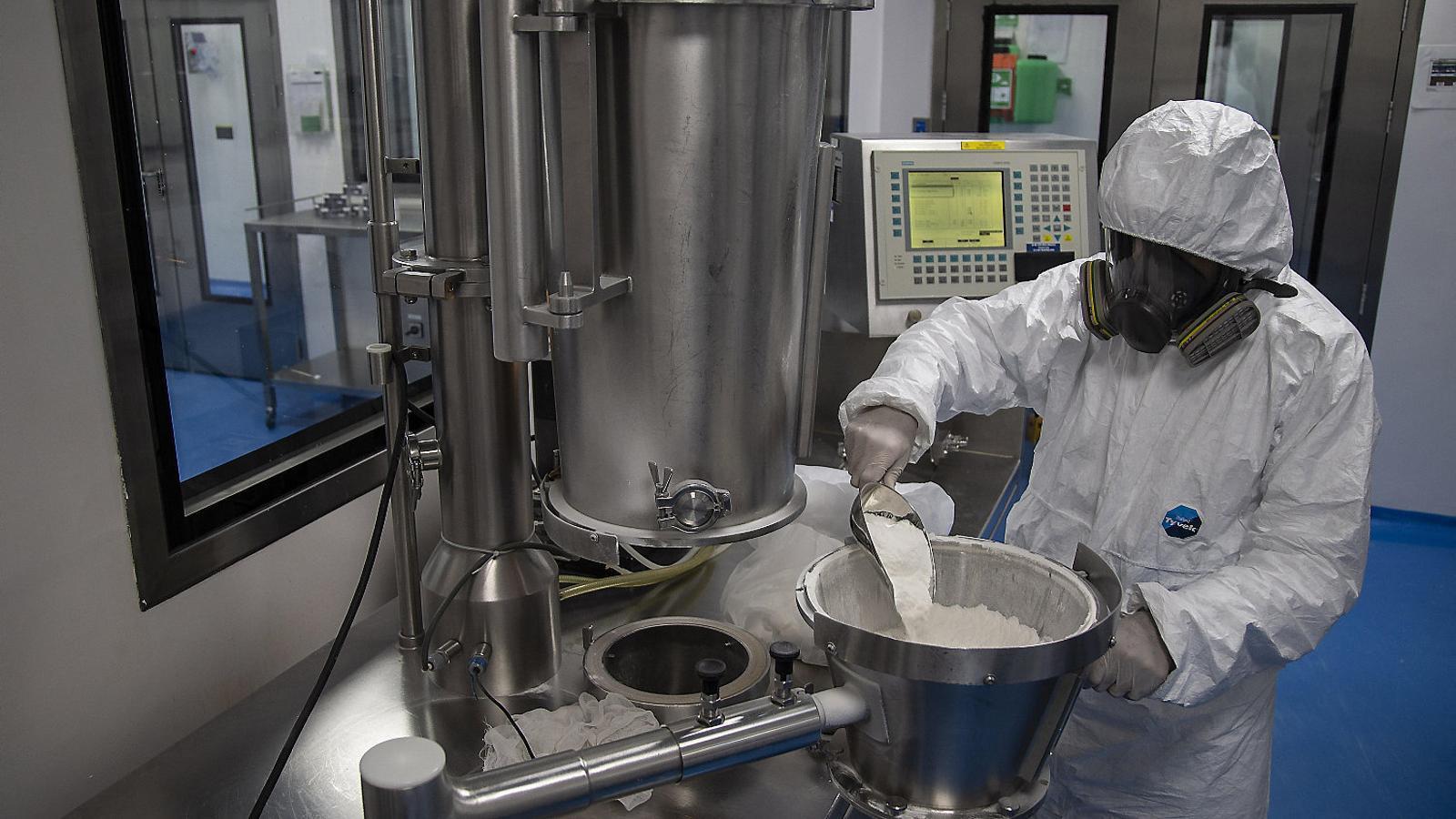
Pharmaceutical powder processing has developed significantly alongside advances in pharmaceutical engineering. Earlier manufacturing systems often relied on separate equipment for blending, granulation, drying, and material transfer, requiring frequent manual handling between production stages. While these methods successfully supported pharmaceutical manufacturing for many years, they also introduced additional process variability and operational complexity.
Today, pharmaceutical manufacturers increasingly adopt integrated powder processing systems designed to maintain material consistency from raw ingredient preparation through downstream production. Instead of focusing solely on individual machines, manufacturers now optimize complete manufacturing workflows where every processing stage contributes to stable product quality and efficient production performance.
This evolution has also been driven by increasingly complex pharmaceutical formulations. Materials with different particle sizes, densities, moisture sensitivities, and flow characteristics require more sophisticated processing strategies. As a result, pharmaceutical process engineering now emphasizes controlled material conditioning, intelligent process monitoring, and repeatable production parameters rather than simply increasing production speed.
These developments have transformed pharmaceutical powder processing into an essential discipline supporting modern solid dosage manufacturing, enabling manufacturers to build more reliable, flexible, and scalable production systems.
Advanced Pharmaceutical Blending Supports Manufacturing Consistency
Uniform ingredient distribution remains one of the most important objectives in pharmaceutical manufacturing. Before powders enter downstream production, active pharmaceutical ingredients and excipients must be blended thoroughly to achieve consistent formulation quality across every production batch.
Modern powder mixing technology has therefore evolved beyond conventional blending equipment. Today's pharmaceutical blending systems combine optimized mixing dynamics, programmable process control, and automated parameter management to improve mixing uniformity while maintaining stable production conditions. By carefully controlling mixing time, rotational speed, material loading, and process sequencing, manufacturers can achieve more reproducible blending results across different production scales.
In addition to equipment performance, manufacturers increasingly focus on powder homogenization and material behavior throughout the blending process. Understanding particle interaction, segregation tendencies, and material flow characteristics helps engineers optimize production parameters while improving downstream manufacturing stability.
Another important development is the integration of closed powder transfer and automated feeding systems. By reducing unnecessary manual handling, these technologies help maintain cleaner production environments, improve manufacturing continuity, and minimize opportunities for material contamination. Together with intelligent process monitoring, modern pharmaceutical blending has become a critical component of integrated pharmaceutical manufacturing rather than an isolated preparation step.
Instead of simply increasing production capacity, today's powder mixing technologies are designed to support process consistency, operational reliability, and long-term manufacturing efficiency—objectives that continue shaping the future of pharmaceutical powder processing.
Granulation Technology Builds a Reliable Bridge Between Material Preparation and Final Dosage Production
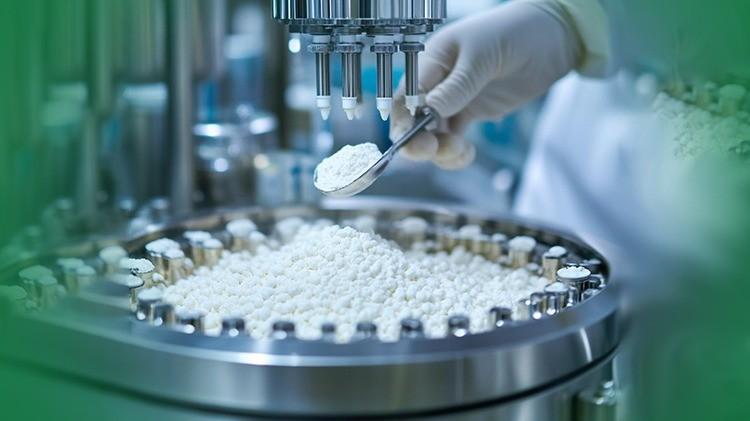
Following pharmaceutical blending, granulation transforms conditioned powders into materials with improved flowability, density, and compressibility. This process creates granules that move more consistently through downstream manufacturing equipment, supporting stable tablet compression, capsule filling, and other solid dosage operations. As pharmaceutical formulations continue to diversify, granulation has become an increasingly important part of pharmaceutical process engineering.
Different production requirements call for different granulation approaches. Wet granulation is commonly selected when formulations require stronger particle bonding and improved content uniformity. Dry granulation provides an effective alternative for moisture- or heat-sensitive ingredients, while fluid bed granulation combines mixing, granule formation, and drying within a single process, simplifying production workflows and improving manufacturing efficiency.
Rather than treating granulation as an isolated operation, modern pharmaceutical manufacturers integrate it into complete material preparation systems. Real-time monitoring of critical processing parameters helps maintain consistent particle characteristics throughout production, allowing manufacturers to achieve better process repeatability while reducing unnecessary variability between batches.
Advances in particle engineering have further strengthened pharmaceutical granulation by enabling more precise control over granule size distribution, density, and moisture content. These improvements support smoother downstream manufacturing while contributing to higher levels of product consistency across different formulations and production scales.
Intelligent Powder Handling Improves Manufacturing Efficiency
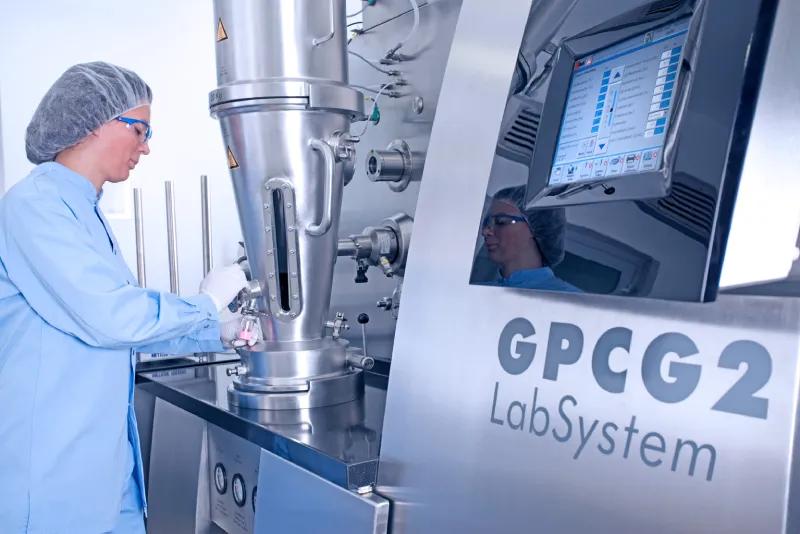
Material movement has become an essential component of modern pharmaceutical production. Efficient powder handling not only improves manufacturing continuity but also helps maintain product quality as materials move between blending, granulation, drying, storage, and downstream processing.
Today's pharmaceutical facilities increasingly adopt automated powder handling systems that integrate vacuum conveying, closed material transfer, intermediate storage, weighing, and feeding into coordinated production workflows. Compared with traditional manual handling, these systems reduce unnecessary operator intervention while improving manufacturing safety, minimizing product loss, and supporting cleaner production environments.
Digital technologies have further transformed pharmaceutical material handling. Intelligent sensors and production monitoring systems provide continuous visibility into material flow, equipment status, and operating conditions, allowing manufacturers to identify potential deviations before they affect downstream production. This data-driven approach supports more stable manufacturing operations while helping optimize overall production efficiency.
As pharmaceutical manufacturing continues moving toward intelligent factories, powder handling is becoming more than a transportation process. It now serves as a critical connection between upstream material preparation and downstream dosage manufacturing, strengthening process integration across the entire production line.
The Future of Pharmaceutical Powder Processing
The next generation of pharmaceutical powder processing will be defined by greater process integration, digital connectivity, and intelligent manufacturing. Instead of optimizing individual production stages independently, manufacturers are increasingly designing complete processing systems in which blending, granulation, drying, material transfer, and quality monitoring operate as a unified manufacturing workflow.
Emerging technologies such as advanced process analytics, intelligent automation, and predictive monitoring provide manufacturers with deeper insight into material behavior throughout production. These capabilities support continuous process optimization, improve manufacturing consistency, and help reduce unplanned production interruptions.
Sustainability is also becoming an increasingly important consideration in pharmaceutical engineering. Modern processing systems are being designed to improve energy efficiency, reduce raw material waste, optimize cleaning procedures, and support environmentally responsible manufacturing while maintaining high pharmaceutical quality standards.
As pharmaceutical manufacturing evolves toward smarter and more connected production environments, powder processing will remain a cornerstone of efficient solid dosage production, providing the stable material characteristics required for reliable downstream manufacturing.
SINOPED's Perspective on Pharmaceutical Powder Processing Innovation
Reliable pharmaceutical manufacturing begins with reliable material preparation. As formulation complexity increases and production standards continue to evolve, manufacturers require powder processing technologies that combine engineering precision with practical operational performance.
At SINOPED International (Liaoning) Co., Ltd., equipment development focuses on supporting complete manufacturing workflows rather than individual processing steps. By integrating pharmaceutical blending, granulation, drying, material transfer, and intelligent control into coordinated production systems, the company helps manufacturers improve process stability while supporting efficient and scalable pharmaceutical production.
Continuous engineering improvement also enables packaging, tablet compression, and capsule filling processes to benefit from more consistent upstream material preparation. This integrated perspective reflects the growing importance of pharmaceutical process engineering, where every production stage contributes to overall manufacturing performance rather than operating independently.
Conclusion
Pharmaceutical powder processing continues to provide the technological foundation for modern solid dosage manufacturing. Advances in pharmaceutical blending, particle engineering, granulation, and intelligent material handling are helping manufacturers improve production consistency while creating more efficient and flexible manufacturing operations.
As intelligent automation and digital process management become increasingly common, future pharmaceutical production will depend on more integrated manufacturing workflows that connect every stage of material preparation with downstream dosage production. Reliable powder preparation will remain essential for achieving stable product quality, efficient operations, and long-term manufacturing performance.
Through continuous engineering development and practical manufacturing experience, SINOPED contributes to the ongoing advancement of pharmaceutical powder processing technologies, supporting manufacturers in building reliable, scalable, and future-ready pharmaceutical production systems.
Frequently Asked Questions
Why is pharmaceutical powder processing important in pharmaceutical manufacturing?
Pharmaceutical powder processing prepares raw materials with the flowability, uniformity, and physical characteristics required for efficient downstream production. Effective material preparation supports consistent tablet compression, capsule filling, and overall manufacturing quality.
How does pharmaceutical blending improve production consistency?
Modern pharmaceutical blending systems promote uniform ingredient distribution and powder homogenization before downstream processing. This helps improve formulation consistency, reduce batch variation, and support stable manufacturing performance.
What advantages does granulation provide during pharmaceutical production?
Granulation improves powder flow, compressibility, and handling characteristics while creating materials that are better suited for tablet manufacturing and capsule filling. Different techniques, including wet granulation, dry granulation, and fluid bed granulation, can be selected according to formulation requirements.
How do automated powder handling systems improve manufacturing efficiency?
Automated powder handling systems integrate closed material transfer, vacuum conveying, weighing, and feeding to reduce manual intervention, improve production continuity, and maintain cleaner manufacturing environments throughout the production process.
What trends are shaping the future of pharmaceutical powder processing?
Future developments are expected to focus on intelligent automation, integrated manufacturing workflows, advanced process monitoring, sustainable pharmaceutical engineering, and digital production management that improves efficiency and process consistency.
Explore our technical resources, industry knowledge, and equipment information.
If you need assistance with equipment selection, production requirements, or technical questions, contact our International Sales Manager Brucr.
WhatsApp: +86 13372559966
Our team helps global customers find suitable manufacturing solutions based on their project requirements.